


| Product Type | 20-count lidded molded pulp egg carton |
| Material | Molded pulp fiber |
| Capacity | 20 eggs |
| Cell Layout | 4 rows × 5 egg cells |
| Lid Structure | Connected molded pulp lid; closure details subject to the selected model |
| Color | Natural pulp color |
| Packing | Standard reference: 50 pcs/thickened PE bag; final quantity subject to order confirmation |
| Supply | Wholesale, OEM, ODM, private label, and bulk export supply |
20-Count Molded Pulp Egg Carton for Egg Packaging
|
|
|
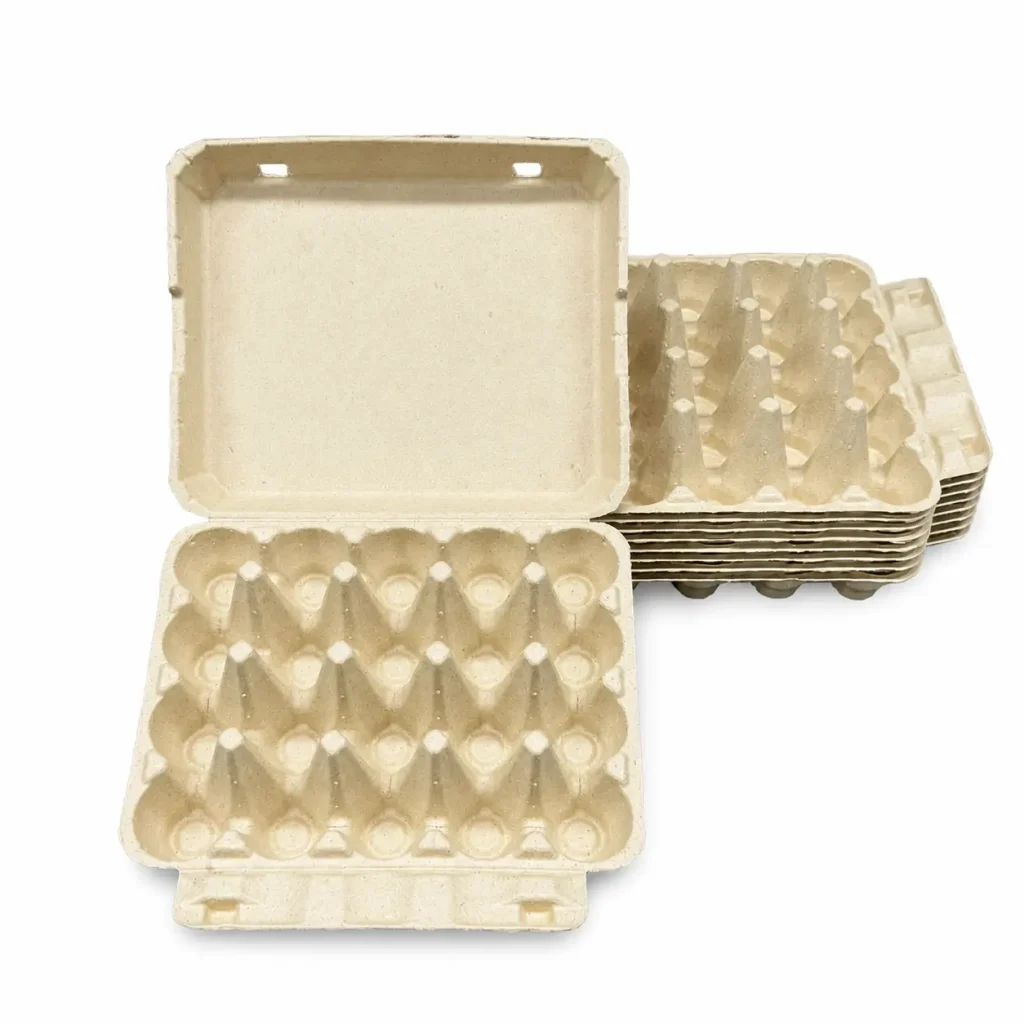
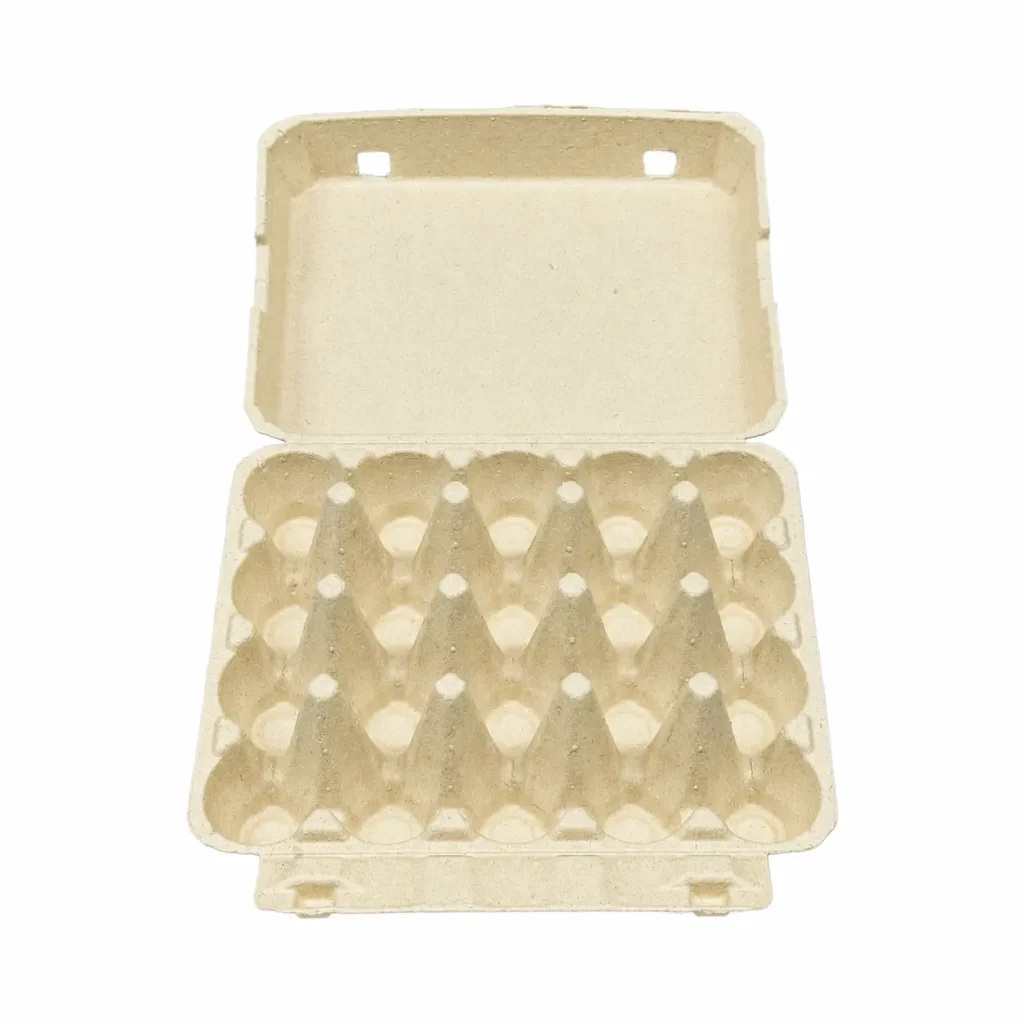
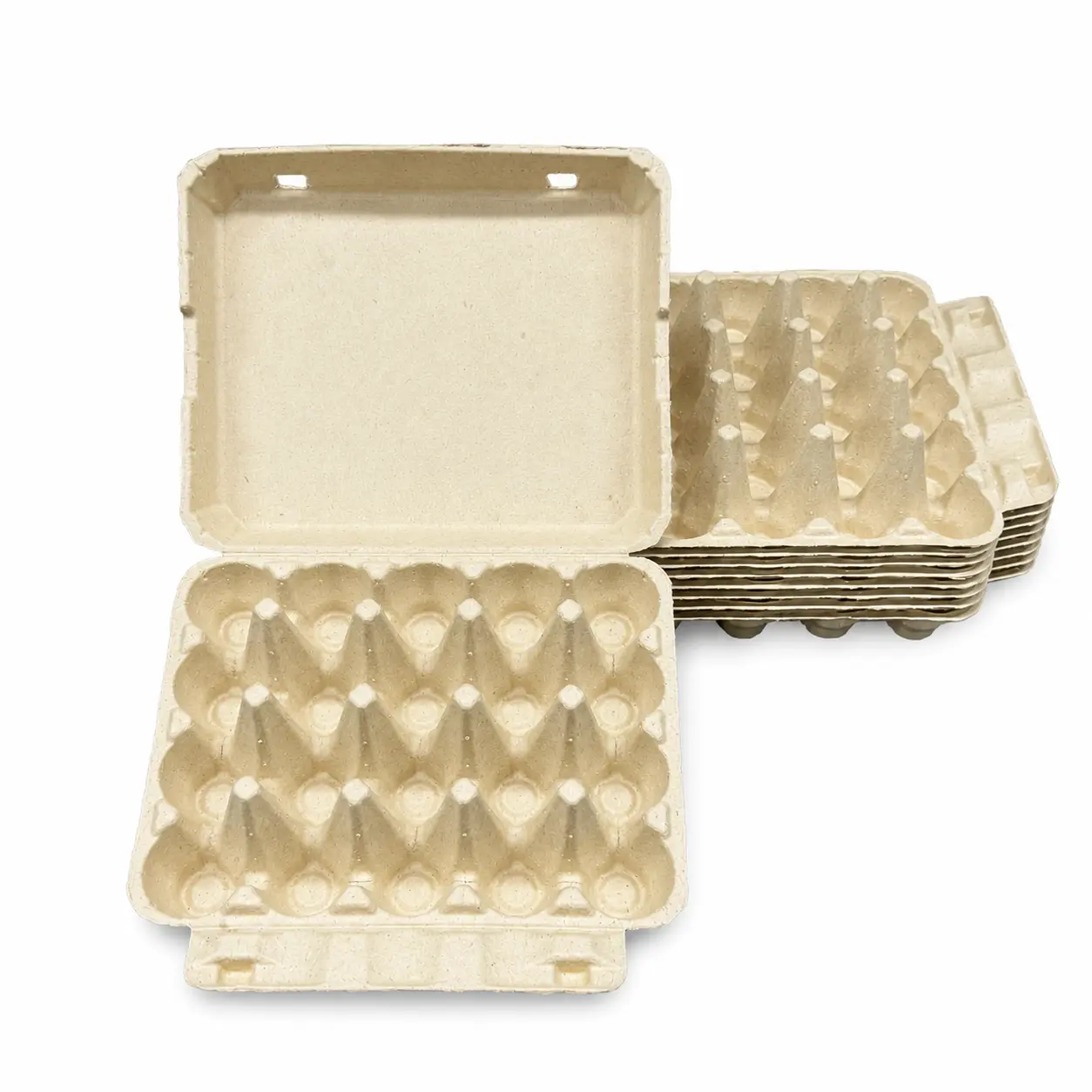
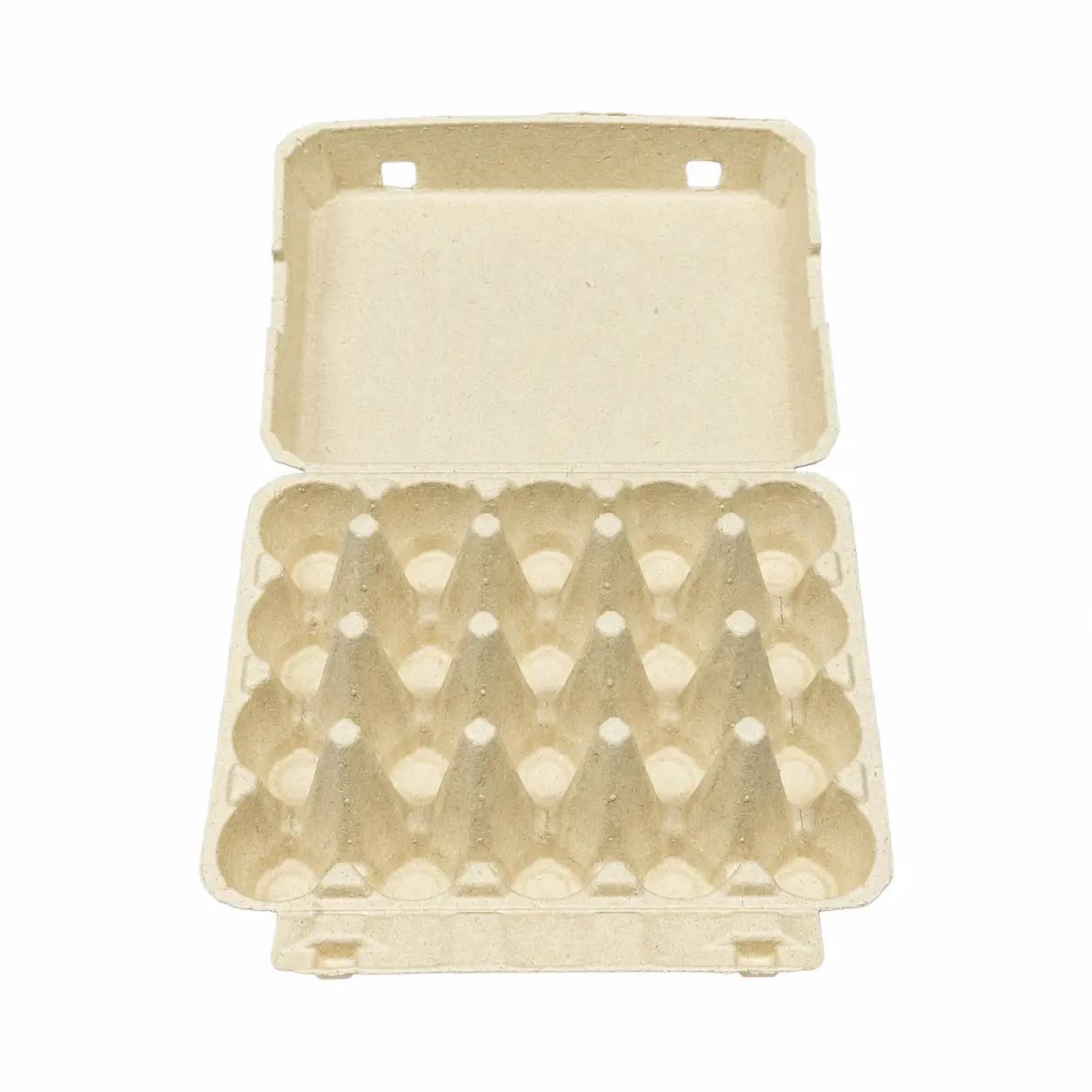
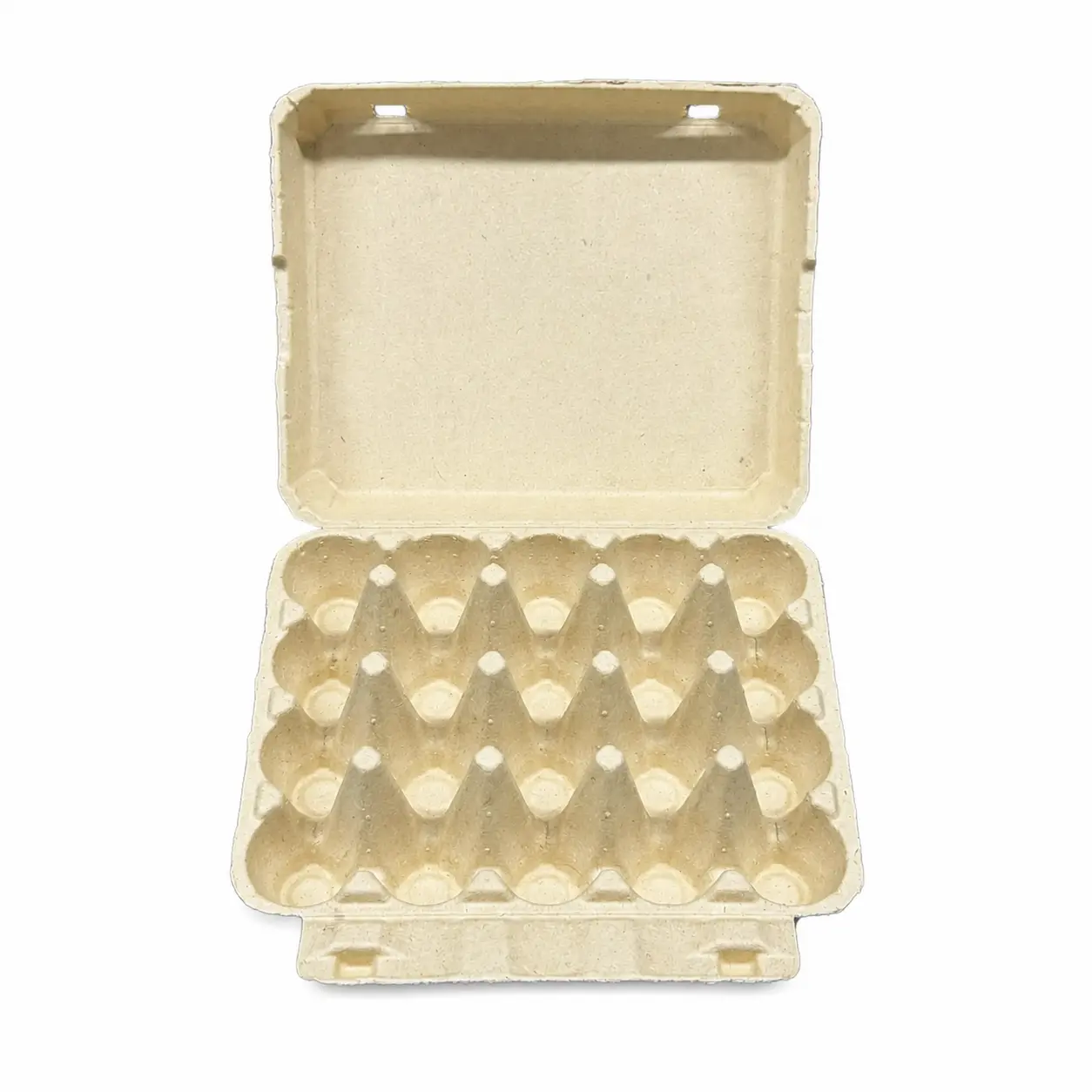
King Green Pack (KGP) supplies the 20-Count Molded Pulp Egg Carton for commercial egg farms, grading and packing stations, distributors, supermarkets, grocery retailers, and private-label egg-packaging programs. Its 4 × 5 layout provides twenty individual molded cells that help organize and separate eggs during packing, storage, handling, transportation, and retail display.
The carton is made from molded pulp fiber and combines a connected lid, raised cell dividers, and a nestable structure. It is intended for wholesale and export buyers requiring regular production, efficient warehouse storage, retail-ready pack quantities, and repeat bulk supply.
Egg dimensions and grading standards vary by market. Buyers should therefore test samples with their actual eggs, packing process, stacking method, and transportation conditions before approving a bulk order.
For other capacities, buyers can explore our Molded Pulp Egg Cartons category, including 10-count, 12-count, 15-count, and 30-count lidded carton options.
Product Specifications
| Product Name | 20-Count Molded Pulp Egg Carton |
| Brand | King Green Pack / KGP |
| Material | Molded pulp fiber |
| Capacity | 20 eggs |
| Cell Layout | 4 rows × 5 egg cells |
| Product Type | Lidded molded pulp egg carton |
| Lid Structure | Connected molded pulp lid |
| Color | Natural pulp color |
| Applications | Egg farms, packing stations, distributors, supermarkets, and retail egg-packaging programs |
| Dimensions | Available on request and subject to the selected model |
| Egg Size Compatibility | To be confirmed using the customer’s actual eggs |
| Closure Details | Based on the final selected carton model |
| Ventilation Design | Based on the final selected carton model |
| Food-Contact Documentation | Applicable documentation can be confirmed for the selected specification, order, and destination market |
| Packing | Standard reference: 50 pcs/thickened PE bag; final quantity subject to order confirmation |
| Outer Carton | Not normally required for standard packing; confirm for the final order |
| Supply | Wholesale, OEM, ODM, private label, and bulk export supply |
Key Features of the 20-Count Molded Pulp Egg Carton
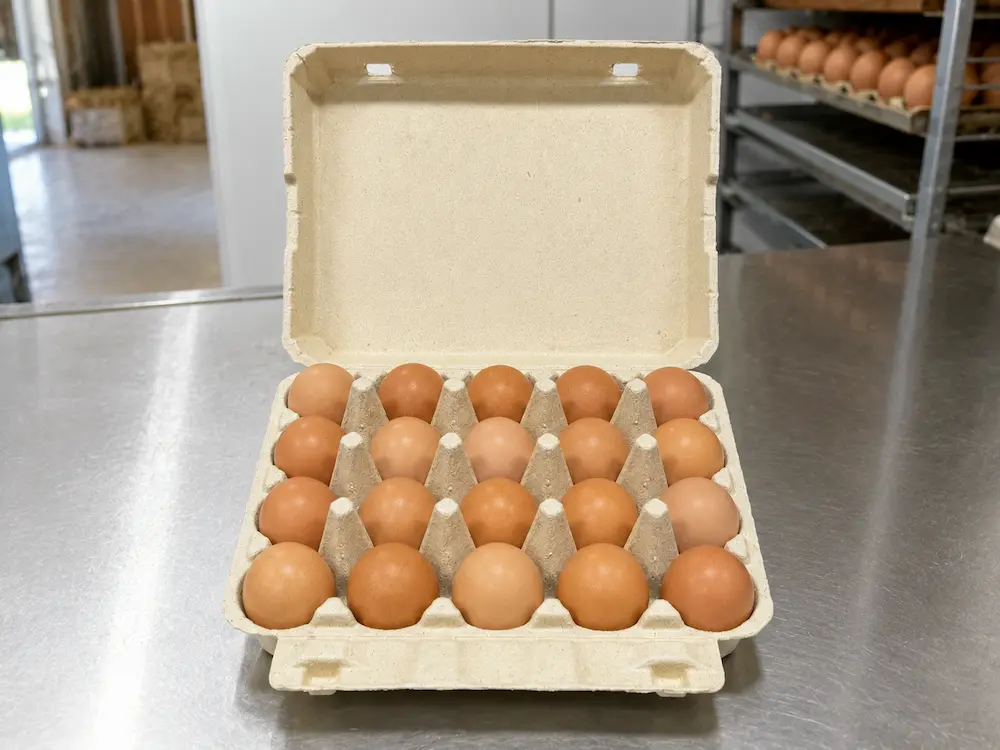
Twenty Individual Egg Cells
The carton contains twenty molded egg cells arranged in four rows of five. The individual cells and raised dividers help separate adjacent eggs and maintain an organized packing layout during ordinary handling, storage, distribution, and retail display.
Actual protection depends on egg fit, carton specification, closure performance, stacking, handling, and transportation conditions. Sample testing is recommended before bulk production.
Connected Lidded Carton Design
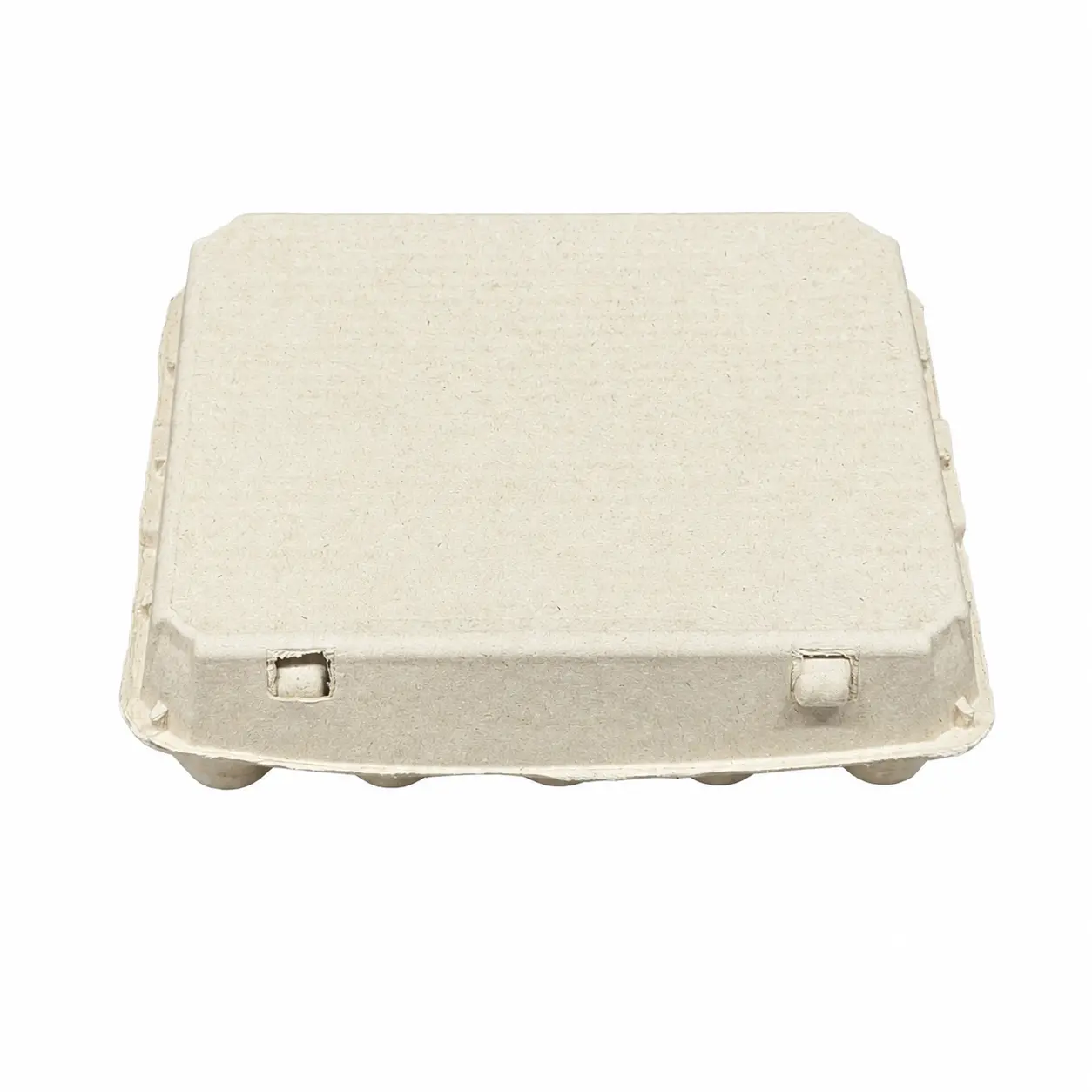
The connected molded pulp lid encloses the egg cells and provides a practical format for farm packing, wholesale distribution, retail presentation, and customer handling. This product is a complete lidded carton rather than an open 20-cell egg tray.
Closure and locking details may vary by model. The final structure should be confirmed before ordering.
Natural Molded Pulp Fiber
The carton is made from molded pulp fiber and has a natural pulp appearance. The available information does not specify a particular plant-fiber source, so material descriptions should remain limited to molded pulp fiber unless a final formulation is confirmed.
Supportive 4 × 5 Cell Layout
The four-row-by-five-cell arrangement creates a clearly defined twenty-egg pack. Raised molded dividers help organize the eggs and reduce direct contact between neighboring eggs under normal packing and handling conditions.
Food-Contact Documentation
Applicable food-contact documentation can be confirmed according to the selected specification, purchase order, customer requirements, and destination market. Any compliance claim printed on customer packaging should correspond to the documentation supplied for the actual order.
Recyclability and Compostability Considerations
The molded pulp carton may be recyclable where local collection and recycling systems accept this type of fiber packaging. Compostability depends on the final product specification, applicable standards, available composting facilities, and local disposal conditions.
Buyers should verify destination-market requirements before using environmental claims on labels, sleeves, websites, or retail packaging.
Molded Pulp Carton Body
The carton body is made from molded pulp fiber without foam or rigid plastic as the carton material. Thickened PE bags are used separately to group and protect nested cartons during storage and shipment.
Nestable Structure for Bulk Handling
Empty cartons can be nested in stacks while their lids remain connected to their bases. This arrangement supports organized warehouse storage, handling, pallet planning, and loading for wholesale and export orders.
Suitable for Twenty-Egg Programs
The 20-count format is intended for markets and product programs requiring twenty eggs in one lidded package. It can support farm packing, distributor programs, supermarket sales, grocery retail, private-label products, and export supply.
Common Applications
- Commercial egg farms
- Egg grading and packing stations
- Egg wholesalers and distributors
- Supermarkets and grocery retailers
- Farm shops and local food markets
- Private-label egg brands
- Food-packaging distributors
- Twenty-egg retail programs
- OEM and ODM egg-packaging projects
- Domestic wholesale and export supply
Why Choose a 20-Count Egg Carton?
A 20-count carton provides a larger pack format for markets where twenty-egg retail or distribution units are required. Its 4 × 5 arrangement combines a defined pack quantity with an individual molded cell for every egg.
Compared with smaller cartons, the twenty-count format places more eggs in one package. Buyers should therefore evaluate carton strength, egg fit, lid clearance, closure alignment, stacking conditions, and filled-pack handling before confirming an order.
For Global Wholesale and Export Buyers
KGP supplies the 20-count molded pulp egg carton for farms, packing stations, packaging distributors, wholesalers, retailers, private-label brands, and importers. Available support includes product selection, sample evaluation, specification confirmation, packing coordination, and repeat bulk production.
Final dimensions, egg-size compatibility, closure details, ventilation structure, packing quantity, branding options, and commercial terms should be confirmed for the selected model and order.
Buyer Decision Guide
Test the Carton with Actual Eggs
Egg dimensions and grading standards vary between farms and markets. Samples should be tested with the actual eggs that will be packed to evaluate cell fit, divider contact, lid clearance, closure alignment, and general handling performance.
Review the Packing Workflow
Confirm that the carton is suitable for the intended manual or automated process. Buyers should evaluate how cartons are separated from their nested stacks, filled, closed, moved through the facility, stored, palletized, and prepared for shipment.
Evaluate Filled-Carton Performance
A filled 20-count carton carries more eggs than smaller retail packs. Test carton strength, lid alignment, locking performance, stacking height, warehouse handling, and transport conditions using representative filled samples.
Confirm Retail and Branding Requirements
Private-label and retail projects may require paper sleeves, labels, barcodes, product information, date coding, or other presentation elements. Confirm the available branding area and packaging method before artwork approval.
Review Destination-Market Documentation
Food-contact and environmental documentation should be reviewed against the selected specification and destination-market requirements. Claims used in sales materials or on packaging should match the documents supplied for the order.
Thickened PE Bag Packing and Export Handling
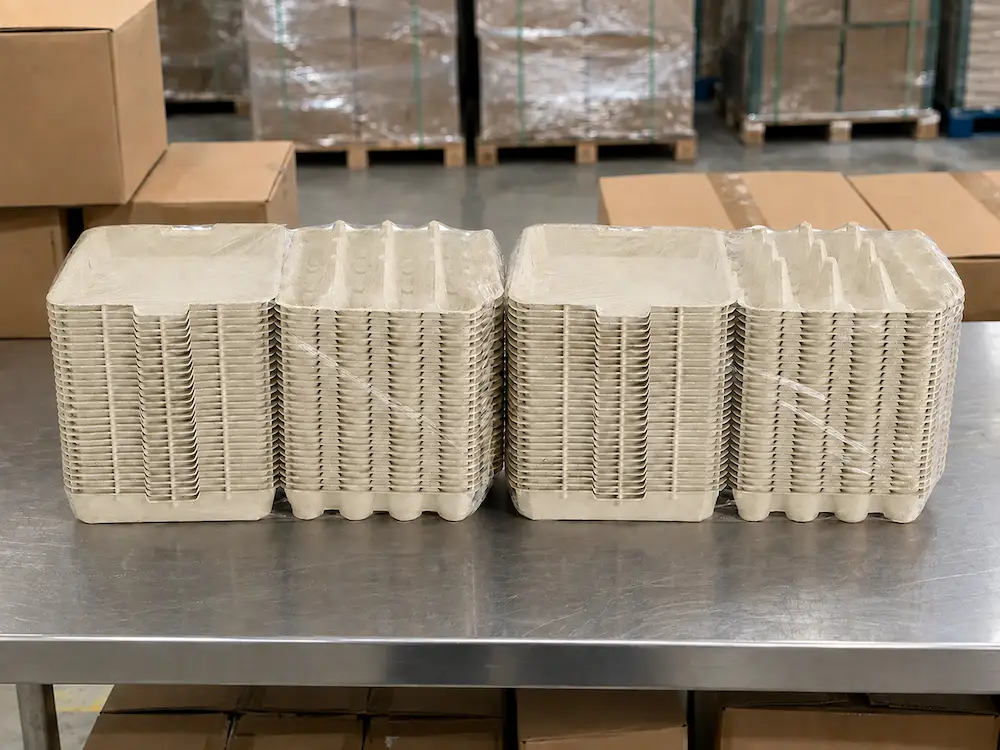
Empty cartons are nested in stacks and packed in thickened transparent PE bags. This method keeps each stack grouped and provides additional protection from dust and ordinary warehouse handling.
The standard packing reference is 50 cartons per thickened PE bag. The final quantity per bag, stack height, PE bag specification, pallet arrangement, and loading method remain subject to order confirmation.
Standard packing does not normally require an outer paper carton. If an outer carton, pallet, label, or other export-packing arrangement is required, it should be confirmed before production.
Before ordering, buyers should confirm:
- The selected 20-count carton model
- Required quantity per thickened PE bag
- PE bag thickness and sealing requirements
- Stack height and warehouse handling method
- Palletizing and container-loading requirements
- External labels or private-label requirements
- Destination market and required documentation
OEM, ODM and Private Label Support
Depending on the project and production feasibility, KGP can support:
- OEM molded pulp egg-carton projects
- ODM packaging development
- Private-label egg packaging
- Custom labels and barcodes
- Retail paper-sleeve coordination
- Customized PE bag packing
- Sample evaluation before bulk orders
- Repeat production and long-term supply
Final customization options depend on the selected structure, production quantity, branding requirements, tooling needs, and manufacturing feasibility.
Why Choose KGP as Your Egg Carton Supplier?
- Wholesale supply: Support for egg farms, packing stations, distributors, retailers, and importers.
- Multiple capacities: Available lidded-carton options include 10-count, 12-count, 15-count, 20-count, and 30-count formats.
- Specification management: Product details are confirmed against the selected model and purchase order.
- Sample evaluation: Buyers can test egg fit, lid alignment, closure, stacking, and handling before bulk production.
- Documentation coordination: Applicable supporting documents can be confirmed for the order and destination market.
- Custom services: OEM, ODM, private-label, labeling, sleeve, and packing support are available subject to feasibility.
- Bulk packing: Empty cartons can be nested and grouped in thickened PE bags for warehouse and export handling.
- Repeat supply: Support for regular purchasing programs and long-term production coordination.
Common Mistakes When Buying Molded Pulp Egg Cartons
- Ordering without egg-fit testing: Egg sizes vary, so samples should be tested with the actual eggs.
- Confusing a lidded carton with an open tray: This product has a connected lid and should not be specified as an open 20-cell tray.
- Assuming every 20-count carton is identical: Cell depth, lid shape, closure, ventilation, and overall dimensions may differ between models.
- Ignoring lid clearance: Confirm that the selected egg size allows the lid to close correctly.
- Comparing unit price alone: Egg fit, nesting efficiency, handling, packing, storage, and transport performance also affect purchasing results.
- Ignoring filled-pack weight: A twenty-egg pack requires suitable stacking and handling procedures.
- Using unsupported environmental claims: Recycling and compostability wording should reflect the final specification and local systems.
- Assuming the carton body and transport packing use the same material: The carton is molded pulp, while separate PE bags are used for bulk packing.
- Not confirming packing quantity: Treat 50 pieces per bag as a standard reference and confirm the final order specification.
FAQ
What is a 20-count molded pulp egg carton?
A 20-count molded pulp egg carton is a lidded fiber package with twenty individual cells for organizing eggs during packing, storage, transportation, distribution, and retail display.
How are the twenty egg cells arranged?
The carton uses a 4 × 5 layout, with four rows of five cells providing twenty individual egg compartments.
How does this carton differ from an open egg tray?
This product has a connected molded pulp lid and forms a complete lidded carton. An open egg tray does not include an integrated lid.
What material is the carton made from?
The carton is made from molded pulp fiber. A specific plant-fiber source should only be stated if the final material formulation has been confirmed.
What egg sizes fit this carton?
Egg-size compatibility depends on the actual egg dimensions and selected carton model. Testing samples with the customer’s eggs is recommended before bulk ordering.
What food-contact documentation is available?
Applicable documentation can be confirmed according to the selected specification, purchase order, customer requirements, and destination market.
Is the carton recyclable?
The molded pulp carton may be recyclable where local collection and recycling systems accept this type of fiber packaging.
Is the carton compostable?
Compostability depends on the final specification, applicable standards, local facilities, and disposal conditions. Destination-market requirements should be checked before making claims.
Is the carton body plastic-free?
The carton body is molded pulp and does not use foam or rigid plastic as the carton material. Separate PE bags are used for grouping and protecting the cartons during bulk packing.
How are the cartons packed?
Empty cartons are nested with their connected lids and bases and packed in thickened transparent PE bags. The standard reference is 50 pieces per bag, subject to final order confirmation.
Can KGP customize the cartons or packing?
KGP can support OEM, ODM, private-label, labeling, paper-sleeve, barcode, and customized packing projects, subject to the selected model, quantity, and production feasibility.
Should samples be tested before ordering?
Yes. Sample testing helps buyers evaluate egg fit, lid clearance, closure alignment, carton strength, stacking, nesting, and compatibility with their packing process.